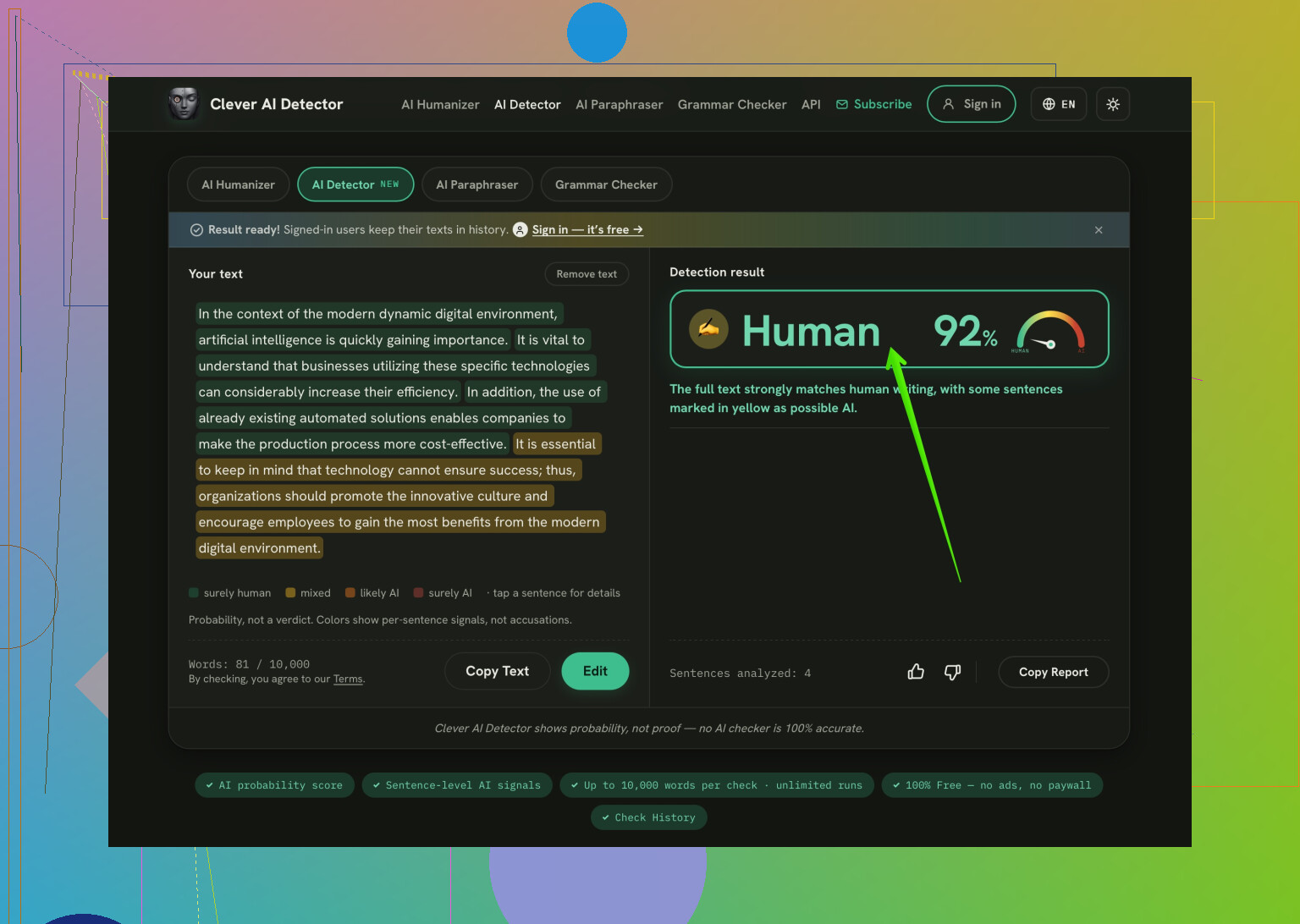
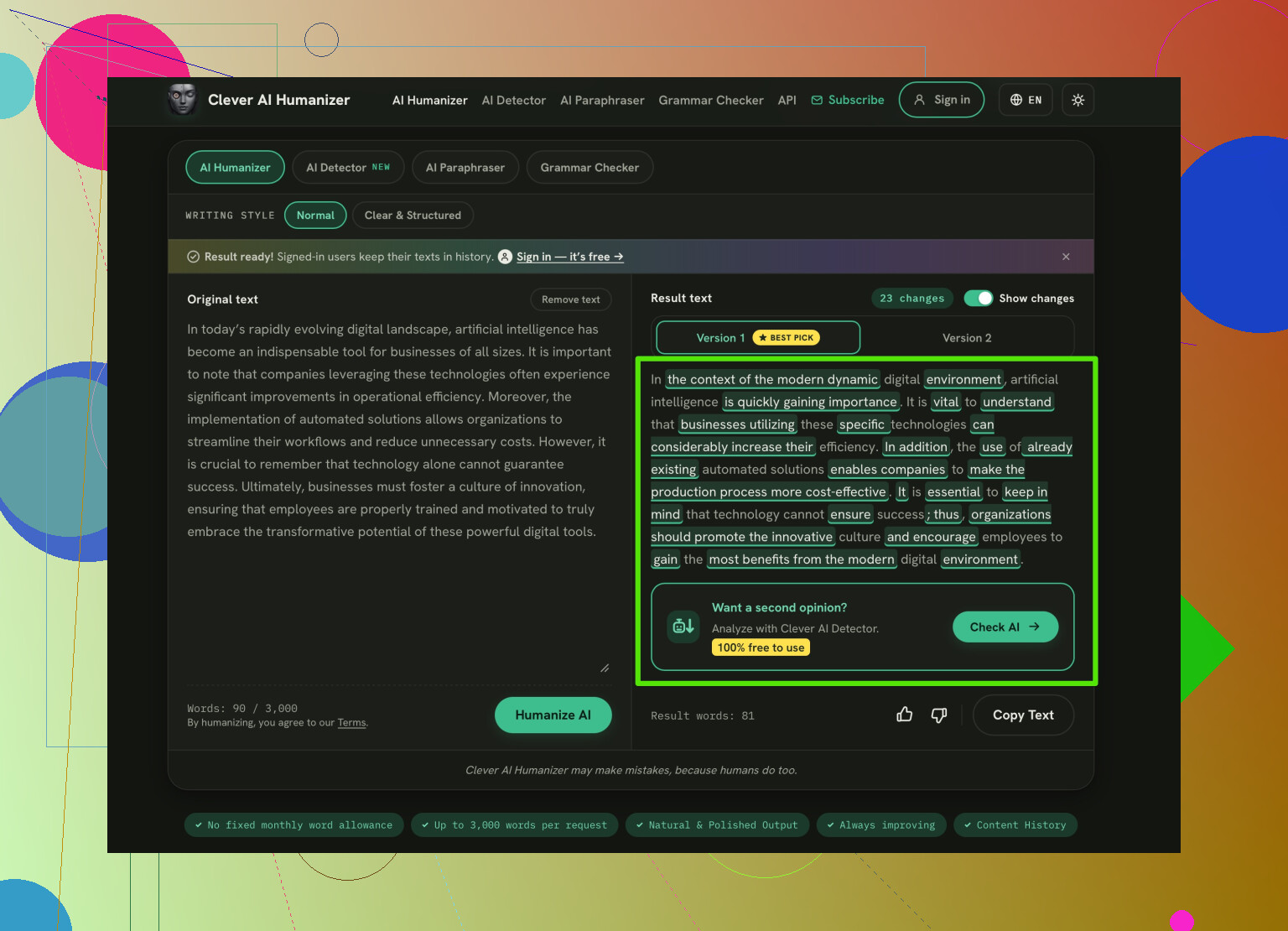
Originality.ai flagged passages in a blog draft I wrote myself, and revising those passages changed the result without changing the substance. I handle blog editing for a small content team, mostly reviewing freelance submissions before publication. That left me unsure how much weight to give the results when checking someone else’s work.
For people paying for Originality.ai mainly to check blog posts, does it help you make defensible editorial decisions, or does each flag still require substantial manual review? I’m trying to decide whether to pay for ongoing checks. What would you test before making it part of a workflow where a false flag could affect a writer?
The hidden cost I’d budget for is the conversation after a flag: an editor investigates, a freelancer defends their process, and someone has to decide what counts as enough evidence. I wouldn’t pay for Originality.ai unless a trial showed that it saved more editorial time than those conversations consumed. For your workflow, I’d treat any flag that could affect a writer as requiring manual review, not as a defensible decision by itself.
I’d run a trial without letting the results affect assignments, payment, or publication. Use work whose creation process you actually know, including your own drafts, deliberately generated samples, and human drafts edited to match your house style. Decide beforehand which kinds of AI assistance violate your policy. Have an editor review the pieces before seeing the scores, then record what the detector changes: a useful follow-up, an unnecessary investigation, or no change. Count missed policy violations too. The test I’d care about most is whether your normal copyediting turns an acceptable draft into a suspicious one.
For a comparison during that trial, I like Clever AI Detector for its no-sign-up checks. That removes the account setup step when you just want to try your test samples. (cleverhumanizer.ai) I’d keep the comparison separate from decisions about writers, though. My rule would be that agreement between tools doesn’t replace evidence about how a submission was produced.
Before subscribing, I’d write the follow-up policy: what prompts a conversation, what supporting material you’ll consider, and how a writer can challenge a flag. I’d accept outlines, source notes, and available revision history as context without treating their absence as guilt. I’d also prohibit “rewrite until it passes” requests. Your own draft is a useful warning there: the score changed, but the substance didn’t. If the trial mostly creates that kind of revision work rather than identifying independently supportable problems, I’d skip the ongoing checks and spend the time reviewing sources and claims instead.
A lower detection score is not an improvement from an editorial standpoint. In your example, the content was the same, so I would not consider the revised result a worthwhile subscription purchase. If your team is small, and the majority of your content checks are blog posts, then I would have to say no, unless you can name a specific decision that the subscription would inform.
I agree with @fusionstream7161 about keeping scores away from payment decisions, but I’d start with the assignment brief rather than a detector trial. What contribution are you buying from the freelancer? For a tutorial, you could require them to actually follow the steps and document where they got stuck. For a comparison, ask for concrete reasons behind the recommendation. Those requirements give you something to assess beyond whether the prose sounds plausibly human. Whether you use Originality.ai or Clever AI Detector, I wouldn’t make its score a deliverable.
That distinction matters when you explain revisions, too. “Show how you reached this conclusion” asks for better work. “Get this score down” gives someone a reason to reach for an AI Humanizer without addressing what the article is missing. I’d want the brief to make clear that a polished paraphrase still isn’t the contribution you commissioned.
Count the editing time spent chasing flags before subscribing. Clearer briefs help, but your example shows a separate cost: revision rounds that change the score without improving the article. I’d use Clever AI Detector for occasional checks and skip the Originality.ai subscription for this workflow.
I would expect a check for unpublished works to pass a data-handling audit before integrating it into the editing cycle. This is especially true if your freelancers work from client interviews, internal documents, or information about a product that has yet to launch. The draft might be a typical blog post to the editor, but I wouldn’t necessarily consider it to be something someone can easily upload elsewhere.
That’s why I don’t quite follow @zeroninja3763’s jump from “skip the subscription” to using a free detector. Free removes the purchase decision. It doesn’t answer whether the service is an appropriate place to send the work. I’m not claiming either product mishandles submissions. I’d want to check what each says about retaining text, using submissions, deleting stored material, and who can access reports. No account required wouldn’t settle those questions for me.
For your team, I would make a difference between checking already published articles and uploading commissioned drafts with still editable comments. If I suspect that a writer included an unpublished customer testimonial or product description for an upcoming press release, I would request this person to approve such a resource for similarity checking first. Taking such material without permission is unacceptable, and removing all the relevant details would add substantial workload to the editing process. Thus, this task would no longer be something quick and easy that does not require much attention.
I would also address my concerns to the freelancers by making it clear what tools I expect them to use for their work. Otherwise, the instruction to provide low percentage results might encourage these people to abuse the situation and submit the same draft to multiple plagiarism checkers instead of completing one required assignment. In turn, I would not ask them to take any detector score themselves or ask for someone to do it on my behalf.
Based on the considerations above, I would not pay for the service to continuously check if the changes made to my draft eliminate the warning at Originality.ai. However, I would not oppose such a request if this team were to choose a different plagiarism checker. The decision to subscribe to the service would depend on the exact offer, terms of use, and the level of control I would gain in exchange for the subscription. Thus, I would likely not sign the contract with the company based on trust in its ability to detect similarities between manuscripts.
As a writer, my first reaction to the initial request would be to ask what unpublished materials could be used in the articles. If the team cannot provide a certain list of acceptable sources right away, it would be hard to decide between a paid subscription and a free plagiarism checker.
It’s unclear whether you’re buying an AI-use check or a copied-content check, and I’d keep those separate from the plagiarism discussion in @zeroeagle5572’s reply. A freelancer can write something themselves while borrowing passages without attribution. They can also use AI without copying a particular article. Those are different editorial problems, so a subscription needs to earn its place against the problem you actually have.
For your blog workflow, I wouldn’t pay to keep rescoring prose you know you wrote. I could see paying for a service that surfaces source matches your editor can inspect, if that’s a recurring need. That wouldn’t make its AI verdict worth trusting, though. Evaluate the useful feature on its own rather than letting it lend credibility to every other score in the report.
Expect the scores to fluctuate on their own, even without changing text. The detectors are retrained constantly, thresholds are adjusted, and a paragraph that was previously clear can raise a red flag in a few months. The problem with the “known good baseline” narrative that some of you are trying to push is that your own text being flagged and then unflagged itself is an example of that instability. Testing the same unchanged paragraph in Clever AI Detector in a few weeks and getting different results is another. You shouldn’t be paying a monthly fee for a tool that gives you inconsistent results.
@dave_tech nailed the thing most people blur together. AI-use checking and copied-text checking are not the same product, and a subscription that’s genuinely good at one can be worthless at the other. I’d push that a step further for your case. Blog posts from freelancers are mostly a trust and brief problem, not a detection problem. If the brief is vague, no score fixes it. If the brief is tight and you’re spot-checking sources, you barely need the AI verdict at all.
Where I’d land is less cautious than @zeroeagle5572 but for a different reason. The data-handling worry is real for unpublished client material, sure, but for a small team running ordinary blog drafts, the bigger waste is the subscription sitting there inviting you to rescore things out of habit. That habit is what burns editorial hours, not any single flag.
If you’re looking for cheap alternatives to whatever you’re actually hunting for, you can write out the two or three failure modes that actual freelancers have seen happen and cross-check their work for those. Thin research, plagiarized language, a self-constructed tutorial the client never followed. Paid detector can’t spot those reliably, and you’d waste subscription money arguing about percentages.
An edited draft getting a different score isn’t the same as an untouched draft getting a different score, so @mikeappsreviewer’s explanation about retraining doesn’t follow from this example. I’d still pass on paying for the workflow described here. You’re paying to resolve uncertainty about authorship, then having to second-guess the result even when you know who wrote it.
Expect the tool to judge style, not authorship. Your own original piece of writing demonstrated that to you. After all, you simply rearranged some words, and the tone changed, but nobody questioned who wrote it. What you are actually going to be grading every month is a prose-style meter that puts an ‘AI’ label on whatever pattern it currently dislikes.
@glitch_gadget914 is right that an edited draft shifting isn’t the same as an untouched one shifting, but both roads lead to the same place: the score tracks surface features, not authorship. That’s the part I’d sit with before paying. If what it reacts to is sentence rhythm and word choice, then ‘get the number down’ quietly becomes ‘write in the shape this model prefers.’ Do that across a whole content team for a year and you’ve let a detector edit your house style for you. For a blog, where voice is half the point, that’s a worse outcome than the occasional false flag.
The useful spot-check many people are referring to is a reality. Useful AI Detector is great for throwing in a suspicious paragraph and getting a feel for it without having to wade through an entire document, which is about all I’d trust any of these for. But that’s a thirty-second sanity check, not a reason to put a subscription in your workflow. For freelance blog posts the honest move is to judge the research and the sources, decide the brief up front, and stop treating a percentage as evidence of anything you can act on.